A First Visit to a Community Fair, Without a Full-Day Plan
Plan a first visit to a community fair around one thing you want to see, with room to wander and a clear, comfortable point to head home.
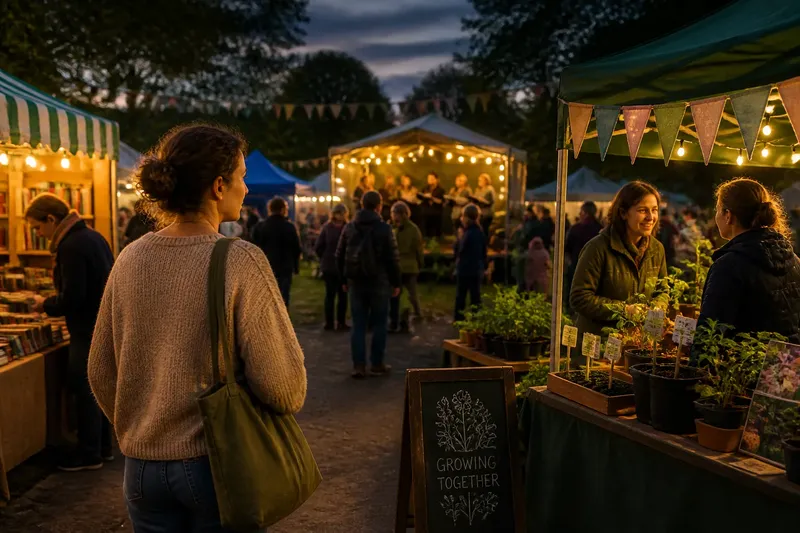
A first visit to a community fair is easier to enjoy when you pick one thing to see and leave the rest open. You might look for a local choir, browse a second-hand book stall or find out what the allotment group grows. That small intention gives the outing shape without turning it into a timetable.
Fairs bring together stalls, performances, food and demonstrations, often in a space where many people already know one another. A simple plan can help you settle in while leaving room to follow a sound, stop for a chat or change your mind.
Choose one anchor
Pick one feature that would make the visit feel worthwhile. It need not be the fair’s biggest attraction. A table selling local honey, a craft demonstration or a neighbourhood history display can be a good anchor.
Check the event notice, leaflet or organiser’s page for its location and timing. If the details are vague, treat the feature as a possibility rather than a fixed appointment. Volunteer-run events may change as the day unfolds.
Keep your anchor specific enough to recognise. “Find the community garden stall and look at its seed display” gives you a first destination. From there, you can decide what comes next.
Say you are curious about a local repair group. You check the fair leaflet, find the group’s stall and ask what kinds of objects members bring to a gathering. After the conversation, you look at a nearby book stall and then leave when you reach the end of the market row. Your visit has a clear shape, and you have learned about the group without needing to stay all afternoon.
Set a soft boundary
Before setting out, decide what would make a comfortable stopping point. That might be after your chosen activity, after a circuit of the stalls or when you feel ready for a quieter place. It is permission to leave before tiredness turns a pleasant visit into an obligation.
Check where the entrance is and whether the fair is indoors, outdoors or spread across both. Look at the travel options and choose a way home that does not depend on staying until closing time. If you are meeting someone, agree that either of you can leave without having to persuade the other.
A natural pause is often easier to act on than “see how it goes”. You could finish a drink, reach the far end of a market row or listen to one performance. If you feel settled, extend the visit by another stall or short loop.
Leave room to wander
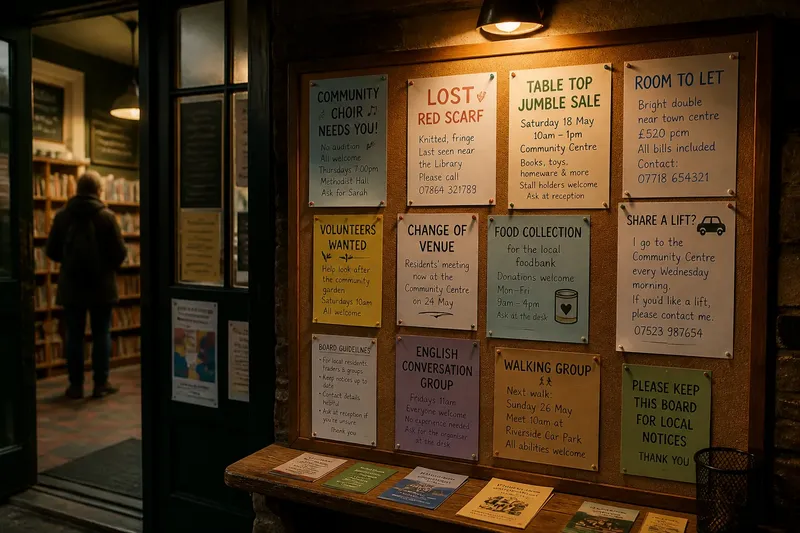
Once you have found your anchor, resist filling every gap with another destination. Walking at an easy pace gives you time to notice a noticeboard, a table where children are making paper decorations or a volunteer inviting visitors to try an activity.
Wandering does not mean you need to join in. You can look, listen, read a stall’s sign or move on. If someone is free to chat, a brief question such as “How did this group get started?” can help you learn more without signing up or making a commitment.
Follow the layout that feels comfortable. If the busiest aisle is crowded, take a quieter route around the edge, pause near an open space or step away for a moment. At a larger fair, a printed programme or map can help you find your way. At a smaller one, asking a steward may be simpler.
Let your interest choose the next stop. A hand-lettered sign might point to a group you have not heard of, or a food stall might tempt you to pause for a snack. These detours are part of the outing, not evidence that you have failed to follow your plan.
Read the social cues
A fair can feel friendly and still have its own rhythms. Some stalls are set up for browsing; others may be busy explaining a service, arranging materials or managing a queue. Notice what is happening and choose a moment when a question is likely to be welcome.
You do not have to perform sociability to belong. It is fine to attend alone, keep a conversation brief or watch an activity from the side. If you are unsure whether a demonstration is open to participation, look for a sign or ask the person hosting it. Without a clear invitation, observing is a sound choice.
Small courtesies help in shared spaces. Leave room for people to pass, keep an eye on children or bags in a busy lane, and avoid blocking a display while you read. For a quieter pause, move away from the main path.
Plan a comfortable visit
A useful plan is a starting point, not a promise to see everything. Choose one feature, decide on a comfortable stopping point and check how you will get home. If the fair changes or your energy shifts, you can adapt without treating the visit as unfinished.
How long should a first visit last?
Choose a visit that suits your energy and travel, rather than matching the fair’s full opening hours. One activity and a wander through part of the site can make a complete outing.
What if the thing I came to see is missing?
Ask a steward whether it has moved or is due later, then decide if waiting suits you. If it does not, choose another stall or head home; your visit need not depend on one feature appearing.
Is it awkward to arrive alone?
Visitors can browse without joining a group. Start with your chosen stall or a clear activity, and let any conversation grow naturally rather than treating it as a requirement.
Should I bring cash?
Payment options vary between stalls, so check the event information if this matters to you. You can still look at displays, listen to performances and speak with organisers without buying anything.
Make the exit easy
When your chosen stopping point arrives, check how you feel. If you are still enjoying yourself, choose one more thing to do. If you are ready to leave, go without waiting for a grand finish. A fair is a public gathering, not a test of stamina or enthusiasm.
Before leaving, you might note the name of a group that caught your attention or take a leaflet if one is available. That gives you something concrete to follow up later without deciding on the spot to volunteer, join or attend another event. You can also simply remember what you liked: the music, the craft tables or the chance to browse.
A first visit to a community fair can be brief and still feel complete. Keep your way home in view, and let your chosen activity—not an imagined duty to see everything—set the pace. That leaves you free to return because you want to, not because you feel you left a task unfinished.